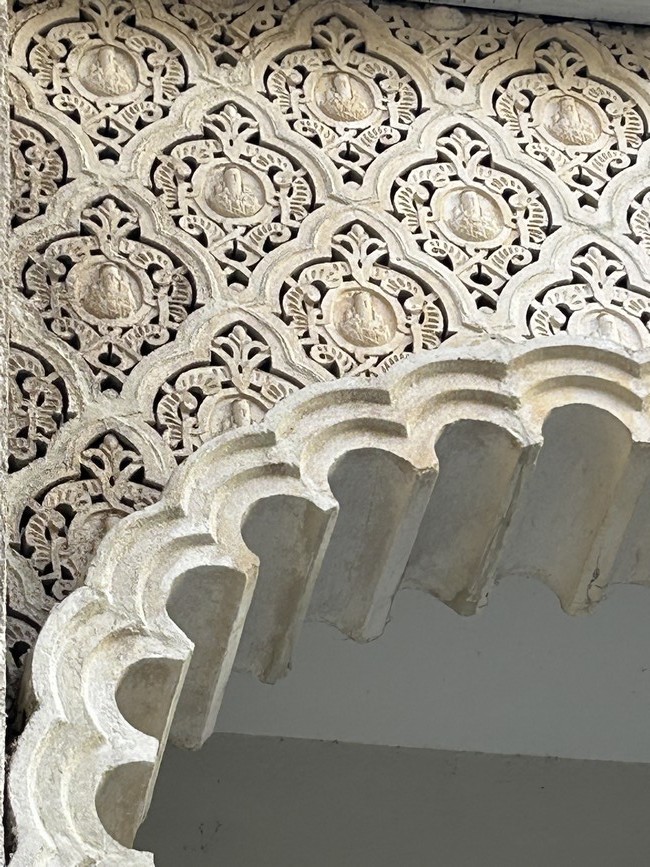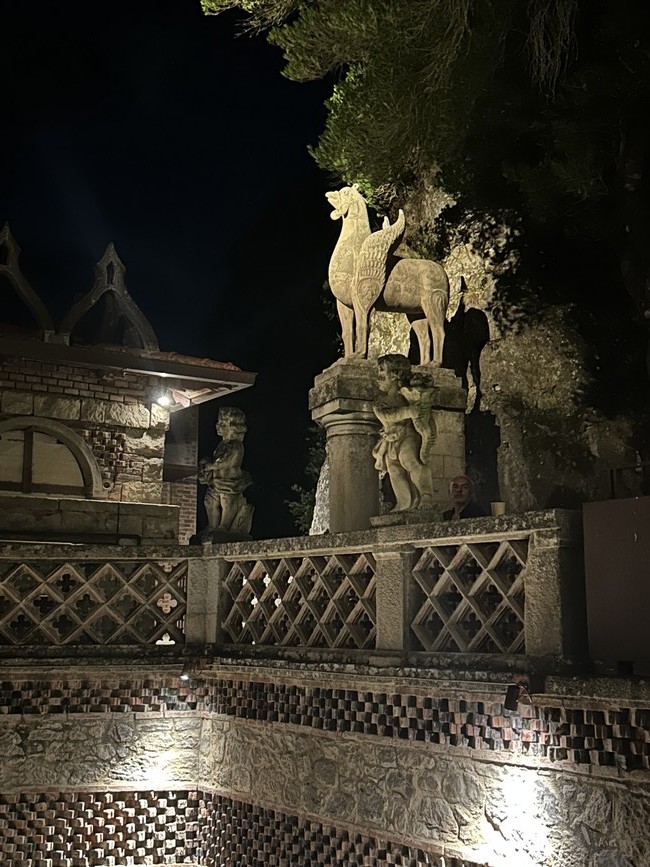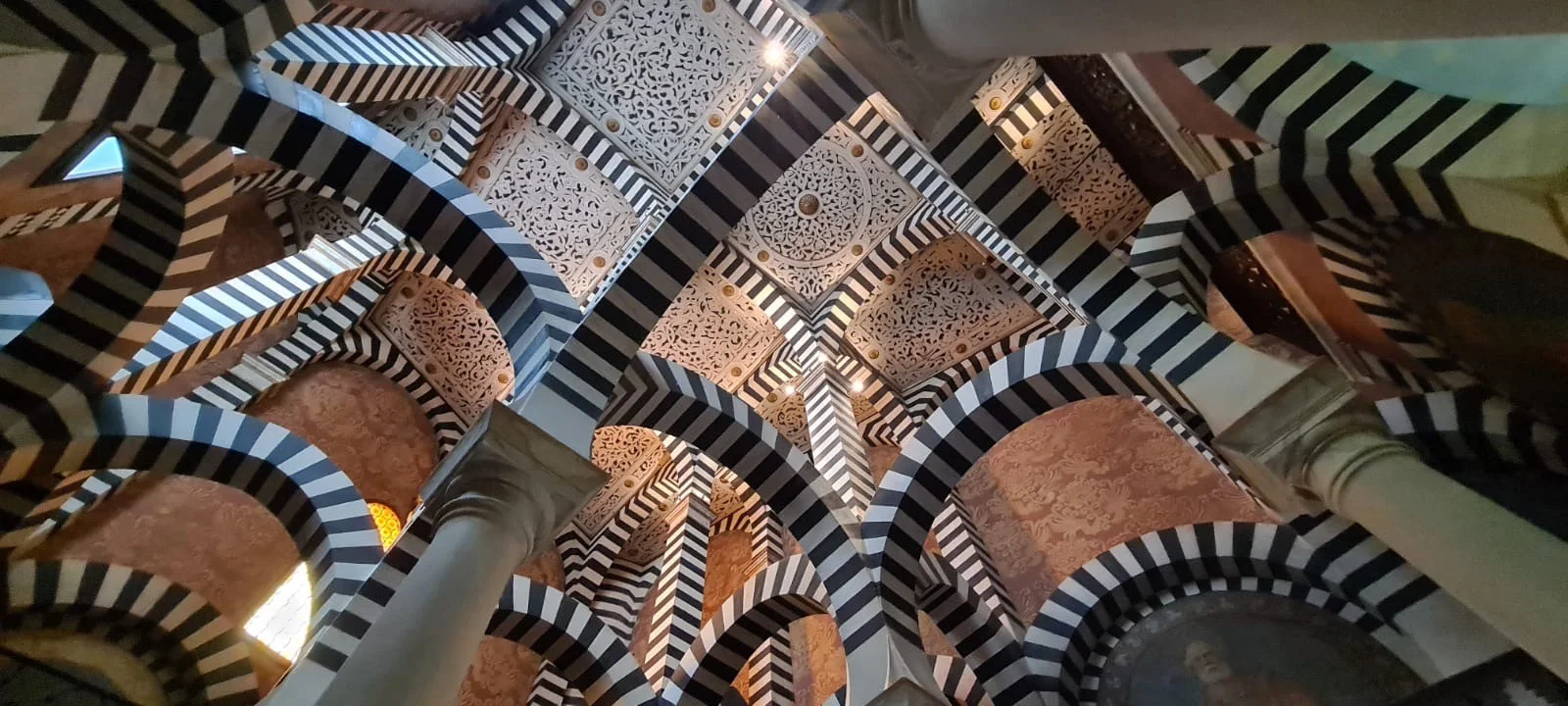
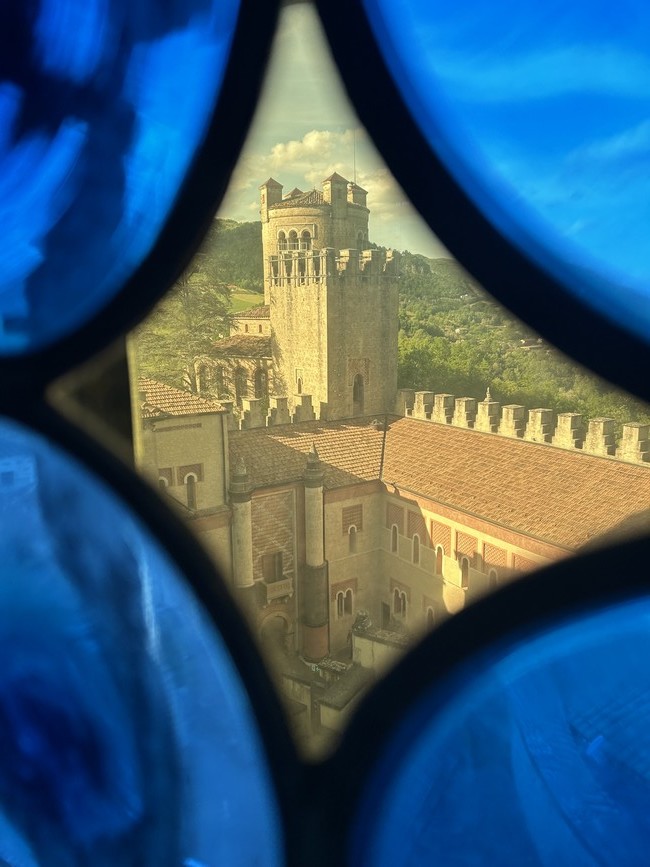
Rocchetta Mattei is a truly unique castle. Not just for its eclectic architecture, but for the story it holds, the origins of its construction, and the incredible intertwining of symbols, evocative elements, and esoteric references. Its labyrinthine sequence of rooms, Moorish courtyards, and vividly colored chambers inevitably enchants visitors.
Built relatively recently, the Rocchetta was started in 1850 by Count Cesare Mattei (1809–1896). Born in Bologna to a wealthy bourgeois family, he received an extraordinary education: among his tutors was Paolo Costa, who introduced him not only to classical subjects but also to astronomy, astrology, numerology, and esotericism.
Mattei frequented the cultured salons of the time, became head of the Bologna Civic Guard, served as a parliamentarian in Rome, and, together with his brother Giuseppe, was granted the title of Count by Pope Pius IX. His life changed dramatically after his mother’s death, following ten years of suffering from breast cancer: from that moment he withdrew into private life, dedicating himself to discovering a new medicine capable of healing every illness.
From his study of homeopathy, Luigi Galvani’s theories on the electricity of the human body, and herbal medicine, he developed Electromeopathy: an alternative medicine based on balancing the body’s electrical polarities. According to Mattei, for it to be truly effective, it had to be produced in a place with precise energetic and esoteric characteristics. He identified, in the Bolognese Apennines, the remains of an ancient castle attributed to Matilda of Canossa and decided to build the Rocchetta on that site.
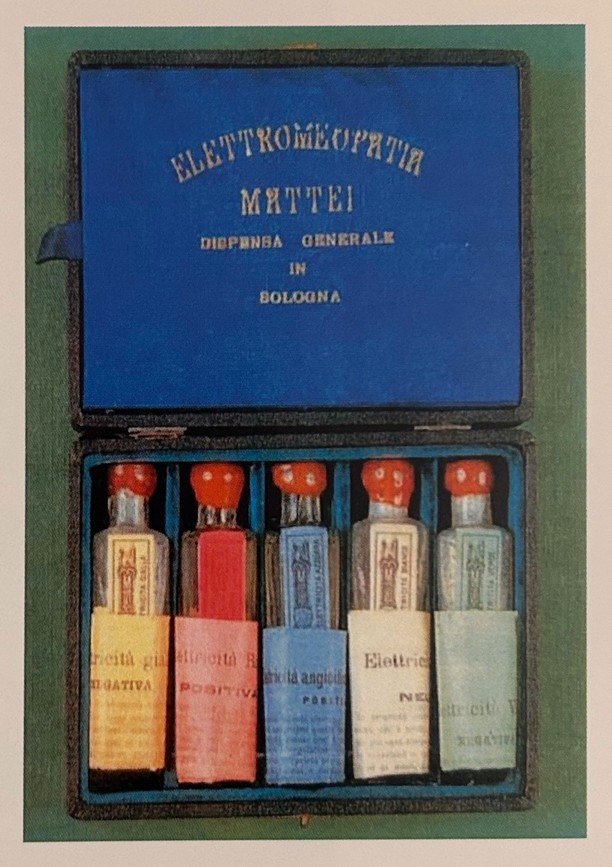
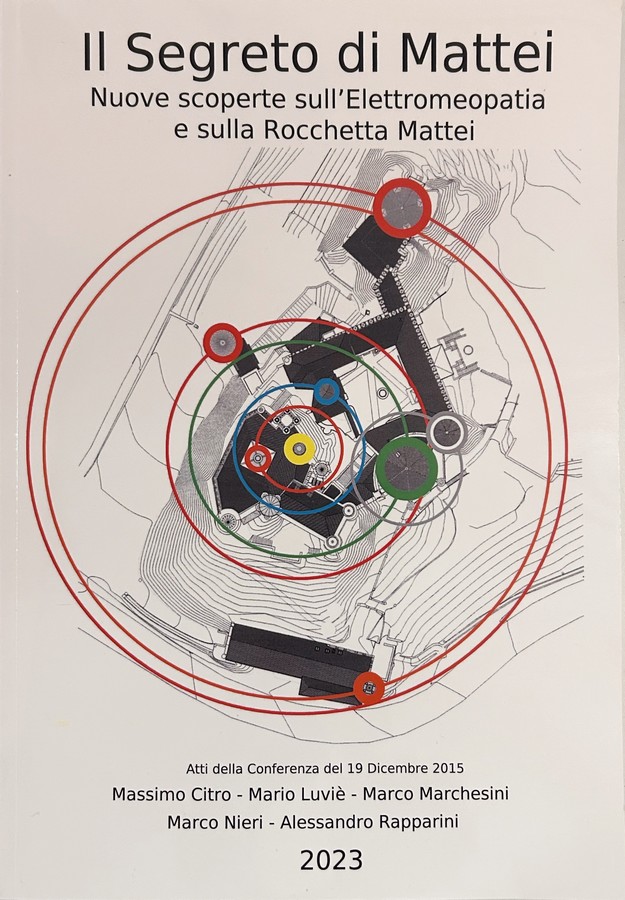
Electromeopathy achieved extraordinary success for over a century: 107 depots worldwide (the most important in London), literary references—including Dostoevsky’s The Brothers Karamazov—and prominent patients such as Queen Victoria, Empress Sissi, the Tsar of Russia, and Gioachino Rossini. The wealthy paid, while the poor could receive treatment for a symbolic offering.
The secret of this medicine was never revealed and died with the Count… yet many claim the key lay in the Rocchetta itself.
Cesare Mattei personally oversaw the construction of the Rocchetta, continuously modifying and redesigning it throughout his life. Nothing was left to chance.
According to studies by the Cesare Mattei Archive Museum, the castle’s architecture follows a precise symbolic vision: its layout seems to dialogue with the celestial map, the entrance aligns with the winter solstice, some courtyard details reference the four elements, and the two talamoni statues symbolize the constant tension between opposites: light and shadow, good and evil.
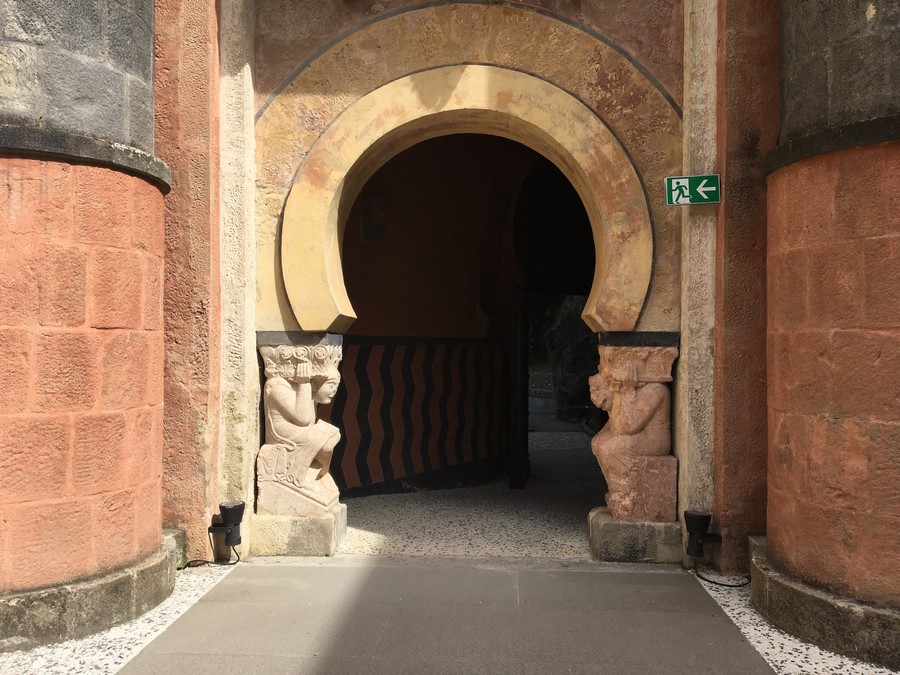
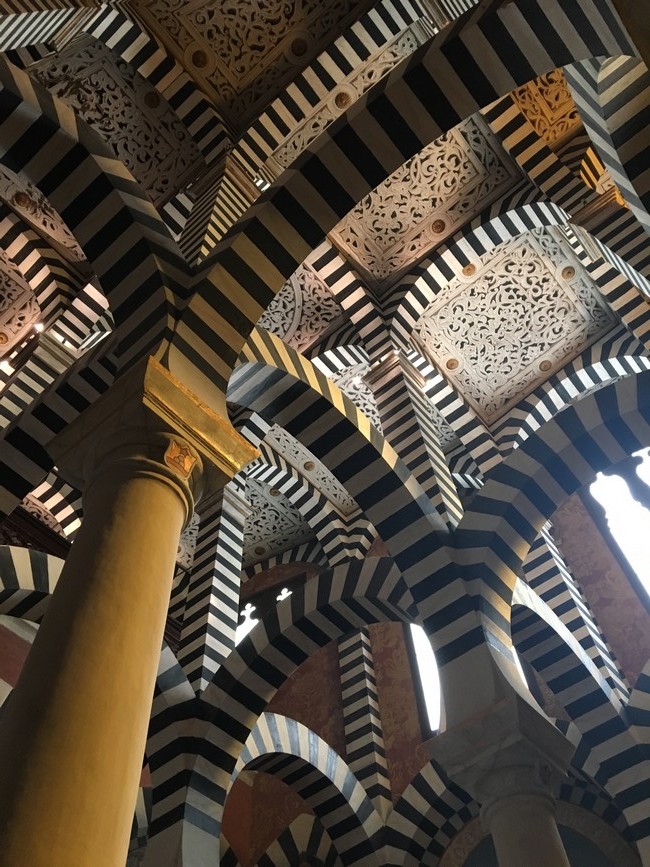
These signs are subtle, often invisible to a hurried glance, yet omnipresent: the Rocchetta does not merely show itself—it seems to ask to be read.
Many of the esoteric and symbolic aspects of the Rocchetta are not addressed during official guided tours, as they are considered unverifiable. They remain silent, even if visible to all. Should you wish, we will be happy to share them during breakfast: details, stories, and interpretative keys that allow you to recognize what often goes unnoticed, transforming the visit into a more conscious and profound experience.

We also recommend visiting the Cesare Mattei Archive Museum (just 300 meters from the castle), which houses materials collected over years of research: the original kit of Electromeopathic remedies, contemporary advertisements, furniture from the Rocchetta, and often unique documents, now returned to collective memory.
After Count Mattei’s death, his figure and work were long obscured, almost forgotten for decades. Only thanks to the restoration of the castle and the study and dissemination efforts of the Cesare Mattei Archive Museum and the Cesare Mattei Study Group has it been possible to restore visibility and depth to his story, revealing once again the fascinating and complex life of Count Cesare Mattei.